


While thinking for a nice year-end topic to post on this blog, I came across a site featuring 20 people who had great contributions to make the 2011 healthcare industry better. Some of these individuals are longtime industry fixtures while others can be clearly considered as outsiders. Some are persons we look up to while other seems never won in some popularity contests. However, all of them did an outstanding job to change or build a better health system.
From the 20 individuals introduced in HealthLeadersMedia.com, I chose to feature only 11 of them. These 11 people are health professionals who used to be in scrubs uniforms and skilled in using those hospital medical equipments.

Patrick J. Quinlan, MD
CEO, Ochsner Health System
New Orleans, LA
He headed in creating Change the Kids, Change the Future Program. Patrick J. Quinlan believed that the best way to happiness is found by helping others through improving the health and wellness of the entire community thus, he started it with the children. Hence; he conducted a study that focuses on changing the behavior of children and families in order to reduce chronic disease in the community.

President, Emergency Nurses Association
Philadelpha, PA
The increasing prevalence of hospital violence that ER nurses’ often encounter while on the job led AnnMarie Papa to conduct a study concerning the safety of nurses, which then became an eye opener for senior hospital administrators to take a look at their nurse staff.
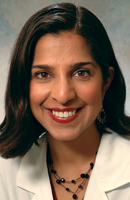
Associate Professor of Medicine
University of Chicago
Pritzker School of Medicine
She always wanted to know why some things work while others don’t in healthcare. So she lead a research that reshapes sleep schedules for doctors to improve quality and safety of the patients.

(left)Brad Cohn, MD, and (right)Alex Blau, MD
Physicians and Mobile App Developers
Their study focuses on good communication between doctors and patients. They believed that the ability to communicate with patients, especially when obtaining medical history and physical exam, is the best diagnostic tool a physician could have since not all patients can speak the same language as their health providers.

Senior Directory of the Endoscopic Research Laboratory
Cedars Sinai Medical Center
Los Angeles, CA
As a surgeon, one of the difficulties he encountered during diagnostic procedure is seeing what is really happening inside the bile duct. So he asked help from a London physicist and they develop a new form of hospital medical equipment called rod-lens system that has the capacity to improve the visual field for the said procedure.

Clinical Director of Emergency Medicine
Ellenville Regional Hospital
Ellenville, NY
In his study, he mentioned the important role played by emergency department nurse practitioners. He said that they are basically comparable to doctors as too can admit, manage, and discharge patients when they are rushed into the emergency department.

CEO, Seattle’s Children Hospital
He is the brainchild behind the Hansen ventilation – a hospital medical equipment that could lead to affordable care for infants in developing countries with breathing problems. He knows that in not so well-developed countries, mechanical ventilators are very expensive. And this is among the major factors why thousands of infant lives are not being saved.

Vanderbilt LifeFlight Program Director
Nashville, TN
She believed that coping with the emotional connection to the patients is among the biggest challenges encountered by paramedics or flight nurses. Hence, she developed programs that help improve care coordination among flight crews, paramedics and ED staff.

Epidemiologist
Virginia Commonwealth, U. Medical Center
Richmond, VA
He noticed that the way hospitals try to prevent infections is not making any sense. This is why he developed a program that promotes zero in on simple hand hygiene. He also recommend that hospital staffers should focus more on keeping the hospital medical equipment sterile at all times instead of testing for MRSA.

Nicholas Christakis, MD
Professor of Medicine and Medical Sociology
Harvard Medical School
Cambridge, MA
He is both an expert physician and a social scientist. Christakis analyzed the old-fashioned face-to-face networks that people form as they connect with friends, families, neighbors, coworkers, and others. And through his study, he learned that people are connected hence; their health is also connected. A person’s health does not only depends on his personal choices and behavior but it is also influenced by the people surrounding him or her.

Diane Whitworth, RN, CWOCN
Nurse Safety Scholar-In-Residence,
Richmond, VA
She has been a champion in the nationwide effort to eliminate hospital-acquired pressure ulcers, which is recorded as the second most common patient safety incident.


