RSS
Showing posts with label home medical equipment. Show all posts

Top Reasons Why CNAs are Lucky

Hey, here’s good news for nursing assistants like me. According to the most recent update of US Bureau of Labor Statistics regarding the employment demands for nursing assistant, most especially for the certified ones, it is projected that the opportunities for the said job will continue to grow to up to 14% until 2016. The reasons for this CNA job’s upswing include the increasing population of baby boomers as well as need to replace soon-to-be-retiring certified nurse assistants. Not to mention the population of CNAs who will be leaving the position.
For persons who have the same passion of helping others especially the elderly or those who have disability and can no longer care for themselves, becoming a nursing assistant is a very excellent career choice.

1. Job Opportunities -  Job openings for nurse assistants who are at the same time expert in using the different hospital and home medical equipments is expected to be more numerous in nursing homes and residential care facilities in hospitals. The increasing population of baby boomers is also another reason for high demand on CNAs. These people will be rushing in nursing homes and home healthcare facilities because in those places they are sure there’s someone who is always available to take care of them.

2. Help Make the Lives of Others Better - Nursing assistants primarily role is to help registered nursing in making the lives of others, especially those weak or sick individuals, to be better by carrying out the procedures administered by the physicians.

3. A Chance to Master the Different Applications of Hospital and Home Medical Equipments - Only selected medical professionals are authorized to make use of the different medical applications found in the hospitals or nursing facility. These people are usually the highly skilled ones. And if you are one  of the CNAs, you might be lucky to use  such tools also.

4. Good salary - A certified nurse assistant can also expect to receive a good salary. Those who are assigned in a much richer state often receive a higher salary rate. 
By the way, if by any chance you landed a job as nursing assistant, your primary task is to support the nursing staff in providing the basic care needs of the patients. As a nursing assistant, you will be required to lift the patient from time to time so that they won’t develop bedsores. You will also assist them in changing their clothing or getting to the bathroom. Apart from monitoring the vital signs of the patients using the different home medical equipment like blood pressure device and thermometer, it is also included in the tasks of certified nursing assistants to administer IV medications. With these tasks, you might probably say that CNAs job is really exhausting especially on times when the ratio of patient-to-nurse is particularly high. But if you really have the desire to help or improve other’s life, all these things are nothing. 

  • Digg
  • Del.icio.us
  • StumbleUpon
  • Reddit
  • RSS

Home Medical Equipment that Goes Digital

Getting the vital signs of the patient before is a little bit time consuming for nurses. Almost all instruments used monitoring the overall health condition of an individual are mechanically operated. But when advances in medical technology came, digital hospital and home medical equipments were invented.

Medical instruments play crucial roles in saving the lives of people. They are purposely designed to monitor health under difficult conditions. And with digital hospital and home medical equipments, these brought great convenience particularly for the part of nurses most especially on times when there are a lot of patients to attend to. These modern instruments are usually designed with high precision and fast response time. While for the part of the patient, modernize hospital and home medical equipments likewise offer them better comfort than traditional ones.

From a simple thermometer and blood pressure device, all these modern hospital and home medical equipments feature the basic systems of a digitally operated device. And that includes a power/battery management system, control and data processing unit, amplification, amplification and A/D conversion of the sensor input, display units and sensory element. No wonder why modern medical instruments are much better and safer to use.

By the way, I have hear some of the common hospital and home medical equipments that go digital:

Digital Thermometer

This replaces the glass thermometer that typically contains mercury. It is much safer to use and results are easier to read.

Digital Blood Pressure Device

Early diagnosis of hypertension becomes possible. One can easily check his or her blood pressure anywhere with a digital blood pressure device.

Digital Pulse Monitor

Monitoring ones heart rate and rhythm is made easier with this digital pulse monitor. It only needs to strap the opto-pulse transducer on the thumb/finger with Velcro straps; turn the power switch on and the pulse in beats per minute will be automatically displayed.

Portable Glucose Meter

Monitoring the blood sugar is very easy with portable glucose meter. With modern glucose meter, it uses a so called “drum” mechanism so there is no need to use test strips.

  • Digg
  • Del.icio.us
  • StumbleUpon
  • Reddit
  • RSS

Tips to Naturally Lower Your Blood Pressure

One of the common reasons why people become obese and at risk for high blood pressure is because of their unhealthy lifestyle. Unhealthy lifestyle simply means the person is smoking, drinking, has poor diet, and lack of physical activity. According to survey, these people with unhealthy lifestyle are three times more likely to die from diseases especially heart-related disorders and cancer. Hypertension is also another prevalent disorder that a person with poor lifestyle may experience.

Today, hypertension or high blood problem is becoming the number one health problem not just of Americans but of all individuals around the world. With more and more children below 18 years old who are becoming obese these days, hypertension is also getting more and more common as obesity is among the risk factors for high blood pressure.

So if you are one of those people with poor lifestyle choices, better think now. If you want to shorten your life span or put an end to it right away, then continue with your poor lifestyle. However, if you still want to live longer and witness your future generation, then start practicing a healthy behavior.

Here in our nursing home facility, many of our clients are hypertensive. We don’t always give them beta-blockers unless the BP level is very high. And on this post, I will share to you our secrets to naturally lower one’s blood pressure or keep it stable at normal level (120.80 mmHg). If you are one those hypertensive people who still want to extend their life span, these tips are for surely beneficial for you.

Have a healthy eating plan
Anything that is too much is bad to your health. Therefore, consume only healthy portions of basic food groups each day. For hypertensive person or has already reached the pre-hypertension stage, having a healthy eating guide is very beneficial. You may consult to a reliable dietitian regarding the recommended number of serving food you need every day. Take note that the recommended daily allowance vary according to the person’s age, gender, as well as if he/she has a disorder. Hypertensive people usually follow a no-cholesterol, low-salt diet.


Be physically active

Avoiding sedentary lifestyle by doing some exercises regularly helps a lot bring your blood pressure down to a safer level. There are so plenty of exercises you can do that are effective to burn the calories you consumed. For hypertensive people, moderate-intensity exercises like brisk walking, biking, and other activities that moderately raise the heart rate are said to be effective in lowering one’s blood pressure.


Drink alcohol moderately and avoid tobacco

The body requires a certain percentage of alcohol for metabolism. However, excessive consumption of could bring a significant effect to the body and one of them is to raise your blood pressure. Meanwhile, hypertensive people should avoid smoking because it does not directly cause high blood pressure; the nicotine content in tobacco injures blood vessel walls and speeds up the process of arteriosclerosis (hardening of the arteries).


Regularly monitor your blood pressure

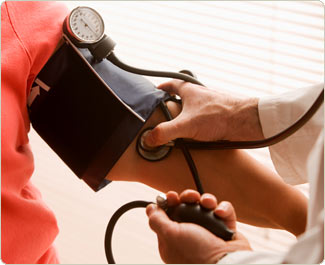
Nothing is better than monitoring your blood pressure regularly. You can now find in the market user-friendly medical instruments for BP testing, which are designed both for home and hospital use. So make sure you have one of these home medical equipment so you can always track your BP level at the same time immediately take preventative measures whenever required.

  • Digg
  • Del.icio.us
  • StumbleUpon
  • Reddit
  • RSS

10 Medical Equipments and Products that Nursing Home Must Have

Similar to other healthcare facilities, nursing homes are also equipped with a number of medical equipments that will help caregivers or nursing assistants like me to effectively carry out our every day duties to people who require constant nursing care and have significant deficiencies with activities of daily living. Below is a list of home medical equipment and products essential in my duty. By the way, I work in an assisted living type of nursing home care.


Sphygmomanometer – This serve as a blood pressure device in order for me to accurately monitor the BP reading of my client. Through this, I am able to save my patient from possible hypertension or hypotension. Blood pressure device comes in various types but I feel more comfortable the one with an analog manometer.


Thermometer – This instrument is very essential in getting my patient’s body temperature. And it is so impossible to determine whether the person is suffering from hypo- or hyperthermia without using a reliable thermometer. There are two classifications of thermometer – the glass thermometer and the digital thermometer. I often use the latter device it is easier and safer to use.


Heart Monitor – Portable heart monitor is another important home medical equipment for me when working in nursing homes. Through this, I become aware the heart condition of my patients.


Wheelchair – The wheelchair is among the important ambulatory devices for those who cannot walk. But aside from them, I also use wheelchair to safely and comfortably transport my patient from one place to another. Wheelchairs are available in two types – automatically operated and manually operated. From these two types of ambulatory device, I am at ease in using a manual wheelchair to my patient.


Crutches – This is another essential mobility device for my patients who have mobility impairment or an injury that limits his or her walking ability.


Gloves – They are part of the personal protective equipment required for every healthcare workers like me. Gloves help protect my hands from being exposed to harmful germs and bodily fluids, which often causes cross-contamination.


Disinfectants – Preventing the spread of infection is always the first priority in healthcare facility. This is the reason why every healthcare worker should have with them a disinfectant like hand sanitizer, antibacterial soap, antibacterial wipes, and sterilizer solution in order to keep ourselves, the facility, and the equipments clean.


Forceps – This handheld, hinged instrument is intended for grasping and holding objects. Its functionality is something that a healthcare professional truly appreciate because without this device, it is very difficult too large fingers to grasp small objects or to hold several objects at one time yet the other hand is busy performing other tasks. The forceps also help in preventing cross-contamination.


First Aid Products – Gauze, bandage, adhesive tape, antibiotic ointment, instant cold pack, and doctor prescribed drugs are just some of the medical products that should be included in a nursing assistant’s first aid kit. They are all necessary when giving first aid like burns, cuts, bruises, sprains, breaks, etc.


Scissors – This is one of the medical instruments for cutting. Scissors comes in different types and the bandage scissors is the one that I commonly used. The said cutting instrument features an ergonomically designed blunt tip at the bottom blade to prevent accidental injury when cutting bandages.


  • Digg
  • Del.icio.us
  • StumbleUpon
  • Reddit
  • RSS

How to Get the Pulse and Respiratory Rate Without Using Medical Instruments

As a nursing assistant, one of my tasks is to monitor the vital signs of my client or patient regularly. The frequency of checking the vital signs depends on the physician’s order. For patients who are in critical condition or have just undergone operative procedure, nursing assistants like me are usually advised to do constant monitoring; say within 15 minutes until the vital signs become stable. While for those are not in critical condition but is sick, checking of vital signs is often done after 4 or 6 hours.

What are the things I have to check? This will definitely include body temperature, blood pressure, pulse rate, respiration rate, and other changes on the patient's skin, eyes, etc. Adults and child have different vital signs range but in this post, I will be focusing on adult. The normal body temperature for adult usually ranges from 36.5 to 37.5 degrees Celsius. Average pulse rate should not be less than 60 beats per minute but should not also exceed to 100 beats per minute. Normal respiratory rate is between 18 to 20 cycles per minute. One complete respiratory cycle is equivalent to 1 inhale and 1 exhale.  Meanwhile for the blood pressure, 120/80 millimeters of Mercury is the suggested normal reading. 

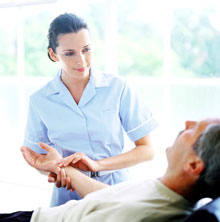
Getting the patient’s vital signs does not always need medical instruments. Some of them can be obtained through sensation and observation, just like the respiration rate and the pulse rate. In this type of examination, using of hospital or home medical equipment is not very necessary. As long as there is a properly functioning wristwatch or clock with a second hand, I can always obtain the accurate value for pulse and respiration of my patient. To get the pulse rate, what I do is to palpate the wall of radial artery using the tips of my two fingers (the index and middle fingers). The radial wall is found on the base of the thumb, with the hand out and the palm up. The number of pulsating beats that I accumulate within one minute will serve as my patient’s pulse rate.

Same as the pulse rate, the respiration rate can also be obtained without using medical instruments. To get the respiration rate, all I need is to look and count how many times the chest of the patient rise and fall within one minute. The rising of chest means the person is inhaling and the falling of chest means the person is exhaling. One inhale and one exhale sums up to one respiration cycle. In some patients, acquiring the respiration rate via chest is difficult. On situations like this, I observe the stomach instead.

  • Digg
  • Del.icio.us
  • StumbleUpon
  • Reddit
  • RSS